We live in a world of numbers. Steps walked, calories burned, hours slept, resting heart rate, blood pressure, weight. Modern technology has made it easier than ever to measure ourselves — and that’s a good thing. But there’s a question we rarely ask: can one number ever tell the whole story?
Every measurement tells only part of the picture
Imagine someone who walks 12,000 steps every day. That sounds healthy. But what if they also sleep poorly, feel exhausted every morning, live with constant stress, and struggle to recover?
Now imagine someone who walks only 6,000 steps — but sleeps deeply, feels calm, has stable energy, enjoys meaningful relationships, and recovers well. Who has better wellbeing? The answer isn’t obvious, because wellbeing is never defined by one measurement alone.
The problem isn’t the numbers
The problem is looking at them in isolation. A smartwatch may tell you how long you slept. A blood test may tell you your cholesterol. A scale tells you your weight. Each is valuable — but none can answer a much bigger question: how is your overall wellbeing changing? That requires a broader perspective.
Your wellbeing is a system
Everything influences everything else. Poor sleep often increases stress. Higher stress can reduce concentration. Lower concentration may affect productivity. Reduced productivity can influence mood. Mood affects motivation. Motivation changes habits. Habits influence recovery. Recovery shapes tomorrow’s energy.
Your wellbeing isn’t made of separate pieces — it’s a connected system. Looking at only one measurement is like judging an entire orchestra by listening to a single violin.
Why comparing one number can be misleading
Many people become focused on improving one metric — more steps, lower weight, higher HRV. These can be positive goals. But sometimes improving one measurement doesn’t improve your overall wellbeing. Someone may lose weight while becoming more stressed. Another may improve fitness while sacrificing sleep. Progress in one area doesn’t always mean progress overall.
That’s why context matters
The better question isn’t “Which number?” but “What does this number mean alongside everything else?” A high step count means something different when you’re sleeping well than when you’re recovering from burnout. Good energy means something different if your mood is low. Individual measurements gain meaning when they’re viewed together.
So why does Longivy have one Health Score?
This may sound like a contradiction — if one number isn’t enough, why create another number? Because Longivy’s Health Score isn’t based on a single measurement. It combines more than 25 wellness markers that reflect different parts of your daily experience: stress, sleep, energy, mood, recovery, lifestyle habits, confidence, mental clarity, physical wellbeing, and more. The score isn’t replacing these experiences — it’s helping you understand how they come together.
The score is only the beginning
The Health Score isn’t the destination — it’s the starting point. Behind every score is a richer picture: your Wellness Level, your seven Vital Zones, your strongest areas, your opportunities for improvement, and your personal trends over time. The score simply makes that complexity easier to understand.
The most valuable trend isn’t today’s number
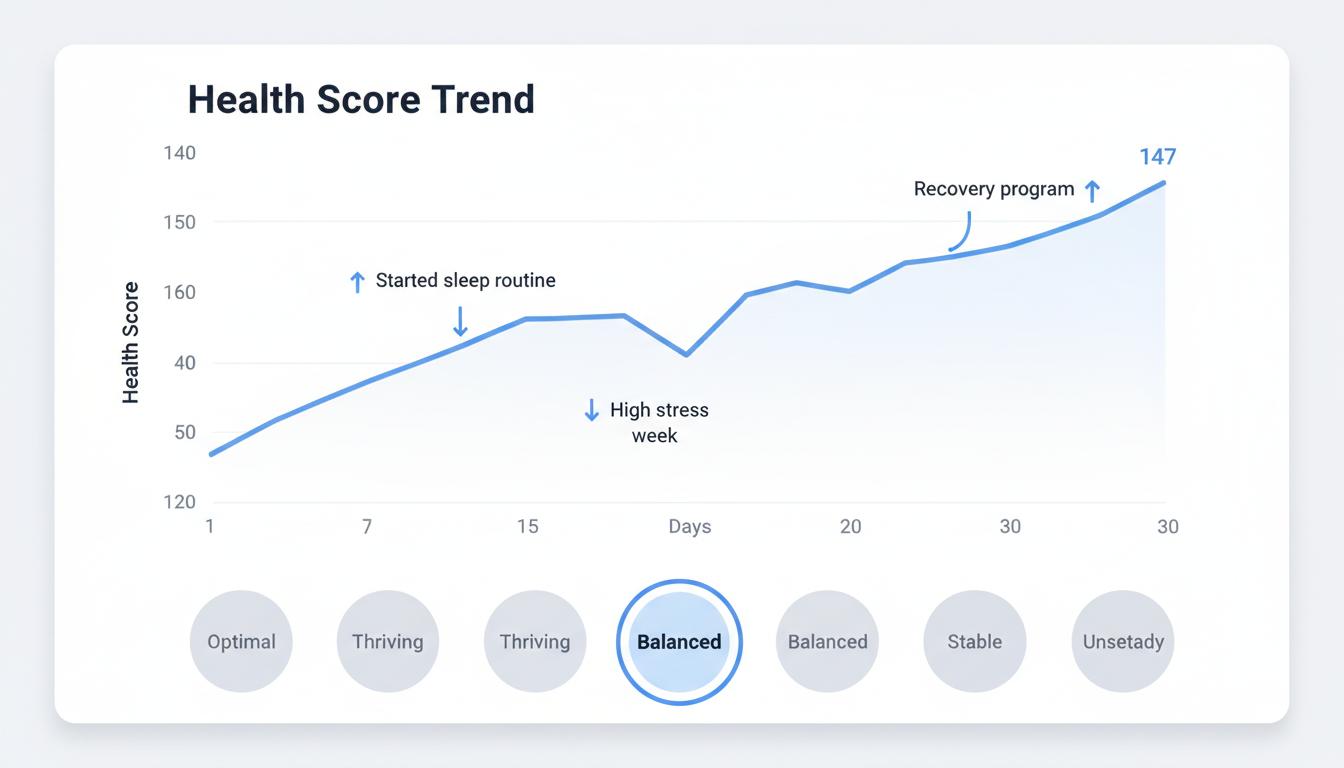
Many people become attached to today’s result, but one score tells you very little. The real value comes from observing change. How has your score changed over weeks and months — after improving your sleep, reducing alcohol, exercising consistently, or taking a holiday? Over time, patterns emerge that teach you more than any individual measurement ever could.
Discover what works for you
Wellbeing isn’t about copying someone else’s routine — it’s about understanding your own. Two people can follow the same diet and experience different results. What matters is discovering how your own wellbeing responds. That’s why Longivy focuses less on chasing perfect numbers and more on helping you learn from your own experience.
A better way to think about measurement
Numbers are incredibly useful. But they should help us understand ourselves — not control us. The goal isn’t to collect more data; it’s to gain more insight. Not perfection, but awareness — because awareness leads to better decisions, and better decisions, repeated over time, can lead to meaningful improvements.
Final thoughts
The question isn’t whether numbers matter — they do. The real question is whether we’re measuring the right things, and whether we’re looking at them together rather than separately. When we step back and see the bigger picture, numbers stop being isolated statistics. They become part of our personal story — and understanding that story is where meaningful change begins.
Curious about your own wellbeing? Start measuring your Health Score and discover what works for you.
Get My Health Score